
Introduction
What this guide covers
Most creators assume sponsorships only happen after hitting 100,000 followers. That assumption costs them years of potential income. Brands increasingly seek smaller creators with engaged audiences rather than massive accounts with hollow metrics. A creator with 3,000 highly engaged followers often delivers better results than one with 300,000 passive ones.
This guide walks you through exactly how to get sponsorships as a creator, even with a small audience. You will learn how brand partnerships actually work, what companies look for beyond follower counts, and the precise steps to land your first paid deal. The approach here focuses on what you can control: your pitch quality, your niche positioning, and your professional presentation. Whether you have 500 followers or 50,000, the fundamentals remain the same. Brands want partners who understand their audience and can deliver measurable results.
Quick Answer
Getting sponsorships with a small audience requires three elements: a clearly defined niche, proof of genuine engagement, and professional outreach. Start by identifying brands already marketing to your audience. Create a one-page media kit showing your engagement rate, audience demographics, and content samples. Send personalized pitches explaining specifically how you would promote their product. Follow up twice, spaced one week apart. Most creators fail because they send generic mass emails or give up after one attempt.
How Creator Brand Deals Work
Types of brand partnerships
Brand partnerships exist on a spectrum from product-only arrangements to long-term ambassador contracts. Gifted collaborations involve receiving free products in exchange for content, common for creators under 10,000 followers. Flat-fee sponsorships pay a fixed amount per deliverable, whether that is one Instagram post or a series of TikTok videos. Affiliate arrangements pay commission on sales you generate, typically 10-25% per purchase. Retainer deals establish ongoing relationships where you create content monthly for consistent payment.
For smaller creators in 2025, gifted and flat-fee arrangements offer the clearest path forward. Affiliate deals can supplement income but rarely replace direct sponsorships. Ambassador programs typically require established track records with the brand.
What brands look for in creators
Brands evaluate creators on engagement rate, audience alignment, and content quality. A 5% engagement rate on a 5,000-follower account outperforms a 0.5% rate on a 50,000-follower account. Companies want to see comments from real people asking genuine questions, not just emoji reactions.
Audience demographics matter more than total reach. A skincare brand would rather partner with a creator whose followers are 80% women aged 25-40 than one with ten times the followers but no demographic targeting. Content quality signals professionalism. Brands assess whether your existing posts could represent their company well without major changes.
Step-by-Step Guide
Step 1 Find brands in your niche
Start with products you already use and mention organically. Check which companies sponsor creators similar to you but slightly larger. Browse Instagram and TikTok hashtags in your niche to identify active brand accounts. Look for companies running user-generated content campaigns, as these often welcome smaller creator partnerships.
Create a spreadsheet tracking potential brands with columns for company name, contact email, social handles, and notes about their current creator partnerships. Aim for 20-30 brands initially. Prioritize companies whose products genuinely fit your content style rather than forcing mismatched partnerships.
Step 2 Prepare your pitch
Your media kit should fit on one page and include your name, platforms, follower counts, engagement rates, audience demographics, and three content examples. Calculate your engagement rate by dividing total interactions by followers, then multiplying by 100. Include screenshots of your analytics showing audience age, location, and gender breakdowns.
Write a pitch template you can customize for each brand. The template should state who you are, why you admire their brand specifically, your content idea, and your rates. Keep it under 200 words. Brands receive hundreds of pitches monthly, so clarity and brevity win.
Step 3 Send outreach
Find the right contact by checking brand websites for partnership pages, searching LinkedIn for influencer marketing managers, or emailing general inquiry addresses. Personalize each pitch with specific references to the brand’s recent campaigns or products. Generic pitches reading “I love your brand” get deleted immediately.
Send emails Tuesday through Thursday between 9 AM and 11 AM in the recipient’s timezone. Include your media kit as an attachment or linked document. Use subject lines that specify your niche and intent, such as “Partnership Inquiry: Fitness Creator, 8K Followers.”
Step 4 Follow up
Send your first follow-up exactly one week after the initial pitch. Reference your original email and add one new piece of information, perhaps a recent post performance or updated engagement metric. Keep this follow-up shorter than your original pitch.
If you receive no response after the second attempt, wait 30 days before trying again with fresh content examples. Persistence matters, but respect for boundaries matters more. A reminder three days later feels aggressive; a fresh pitch next quarter feels professional.
Examples and Templates
A strong pitch email follows this structure:
Subject: Skincare Creator Partnership (12K followers, 6.2% engagement)
Body: Open with a specific compliment about the brand’s recent campaign or product launch. State your platform, follower count, and engagement rate in the second sentence. Describe your content idea in two sentences maximum. Include your rate or indicate openness to discussing terms. Close with a clear call to action asking for a brief call or email exchange.
For your media kit, include a professional photo, your niche description, platform statistics with screenshots, three top-performing posts with their metrics, and your contact information. List your rates if you have established them, or note that rates are negotiable for first partnerships.
Common Mistakes Creators Make
The most damaging mistake is pitching without research. Emailing a vegan brand while your feed shows leather products wastes everyone’s time. Brands notice when pitches could apply to any company, and they delete those immediately.
Underpricing destroys long-term earning potential. Once you accept a rate, that brand and others in the industry expect similar pricing. Research standard rates for your follower tier before quoting. A creator with 10,000 followers typically charges between 100 and 500 dollars per Instagram post, depending on niche and engagement.
Poor follow-through after landing a deal damages your reputation permanently. Missing draft due dates, ignoring revision requests, or posting content that differs from approved concepts ends partnerships and spreads through industry networks. Track your deliverables meticulously, noting go-live dates and payment milestones.
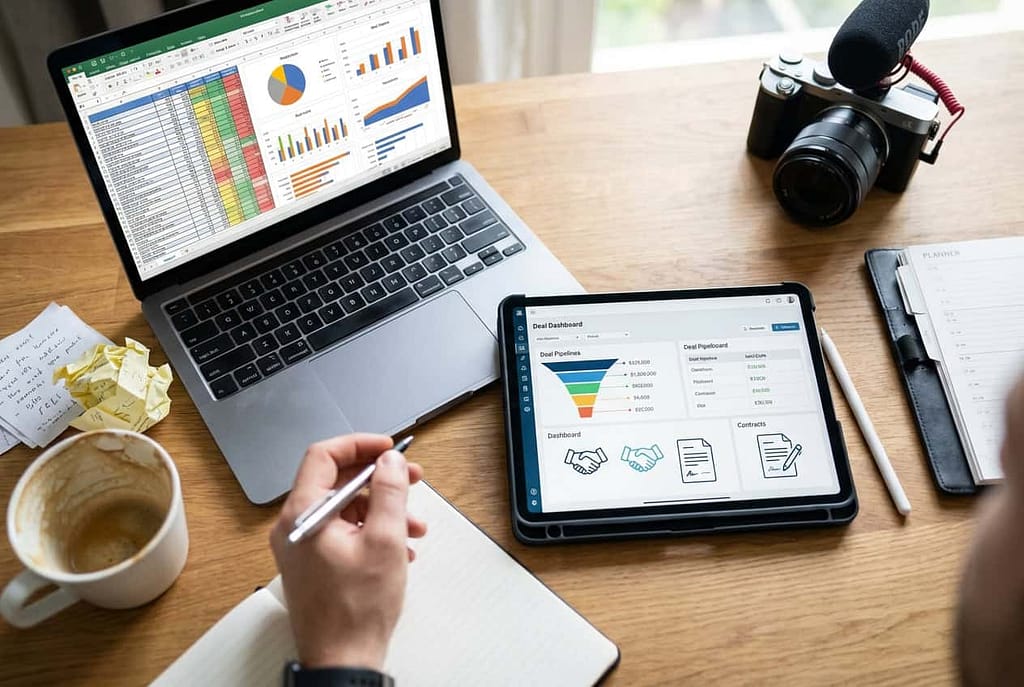
Scattered organization creates mental load that drains creative energy. Tracking deals across email threads, spreadsheets, and notes apps leads to missed deadlines and forgotten invoices. A connected workspace where deals, deliverables, and invoices exist in a single location provides clarity that spreadsheets cannot match.
Frequently Asked Questions
How many followers do I need for sponsorships? No minimum exists. Brands regularly partner with creators under 5,000 followers when engagement rates and audience alignment justify the investment. Focus on engagement quality rather than follower quantity.
What should I charge for my first sponsorship? For creators under 10,000 followers, start with product value plus 50-100 dollars for time and content creation. As you build a portfolio of successful partnerships, increase rates by 25% with each new deal.
Should I work for free products only? Gifted partnerships make sense for building your portfolio and establishing relationships with brands you genuinely love. However, set a timeline for transitioning to paid work. After three successful gifted collaborations, begin requiring compensation.
How do I handle usage rights and exclusivity? These terms significantly impact your effective hourly rate. A base fee of 200 dollars for one post becomes problematic if the brand gains perpetual rights to use your content in paid advertisements. Charge separately for usage rights, typically 25-100% of the original fee per additional use category.
Conclusion
Landing sponsorships with a small audience comes down to positioning, preparation, and persistence. Brands care about engagement and audience fit far more than raw follower counts. Your job is proving that your community trusts your recommendations and matches their target customer profile.
Start this week by identifying ten brands in your niche, creating a one-page media kit, and sending five personalized pitches. Track responses and refine your approach based on what generates replies. The creators who succeed treat outreach as an ongoing process rather than a one-time effort.
As your partnerships grow, managing deals becomes increasingly complex. Follyo helps creators organize brand deals, track deliverables, and send invoices from one workspace built specifically for this work. Get started with Follyo to replace scattered tools with a system designed for how creators actually run their business.